BY NIKKI ADEBIYI, FOUNDER @ BOUNCE BLACK
I recently listened to a Twitter/X Space discussion on ‘navigating neurodivergence and chronic illness in professional spaces‘. It was a deeply moving and thought-provoking conversation, and at times, triggering but affirming.
As I listened to the stories and experiences of people with various overlapping protected characteristics, mostly Black, female and neurodivergent (ND), it reminded me that it was high time I write and share about this topic. With April just gone being Neurodiversity Awareness Month, I have been reflecting on my own journey as a Black ND woman.
The difficulty of disclosure
Dyspraxia, also known as developmental co-ordination disorder (DCD), is a common disorder that affects movement and co-ordination.
NHS
Dyspraxia does not affect your intelligence. It can affect your co-ordination skills – such as tasks requiring balance, playing sports or learning to drive a car. Dyspraxia can also affect your fine motor skills, such as writing or using small objects.
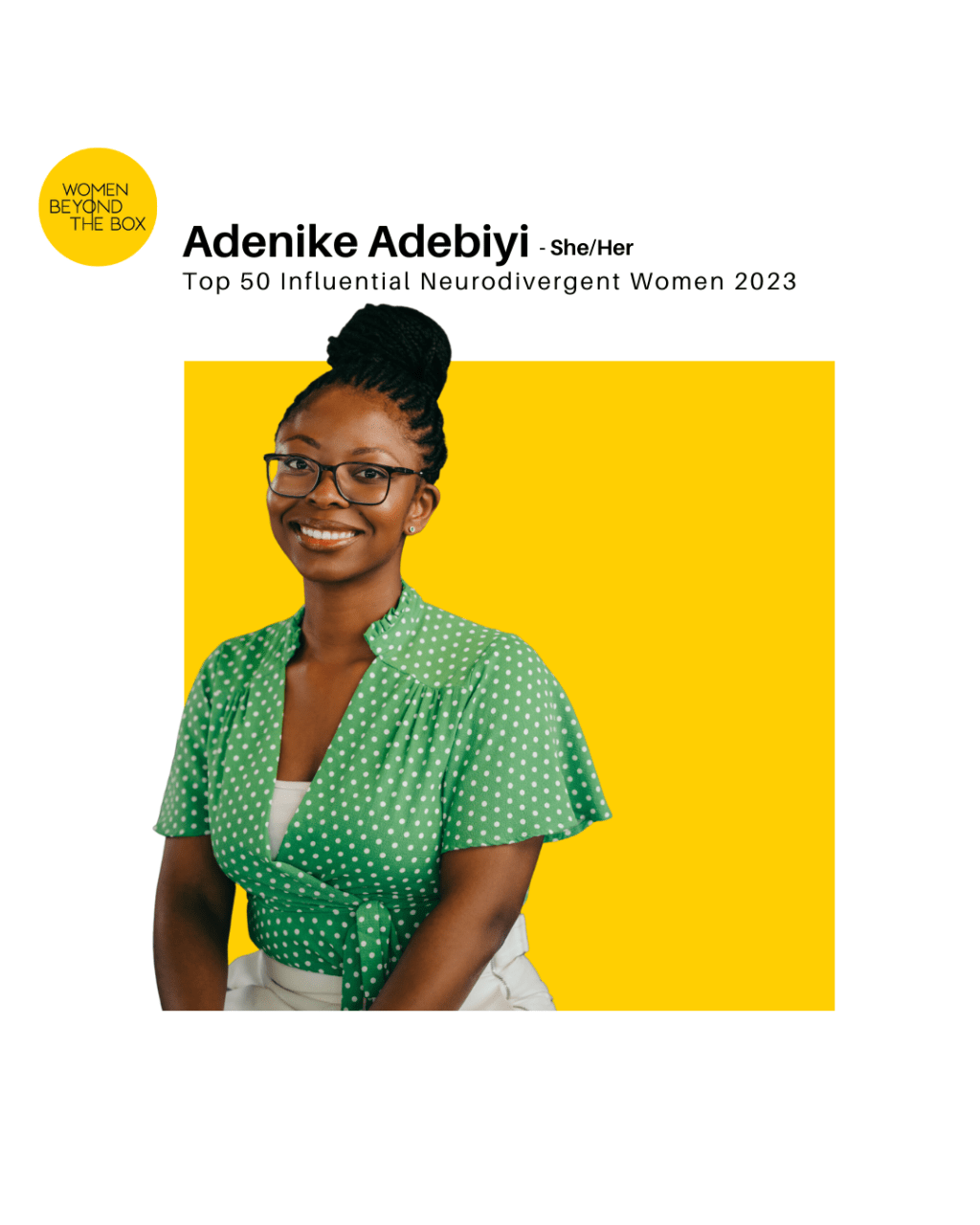
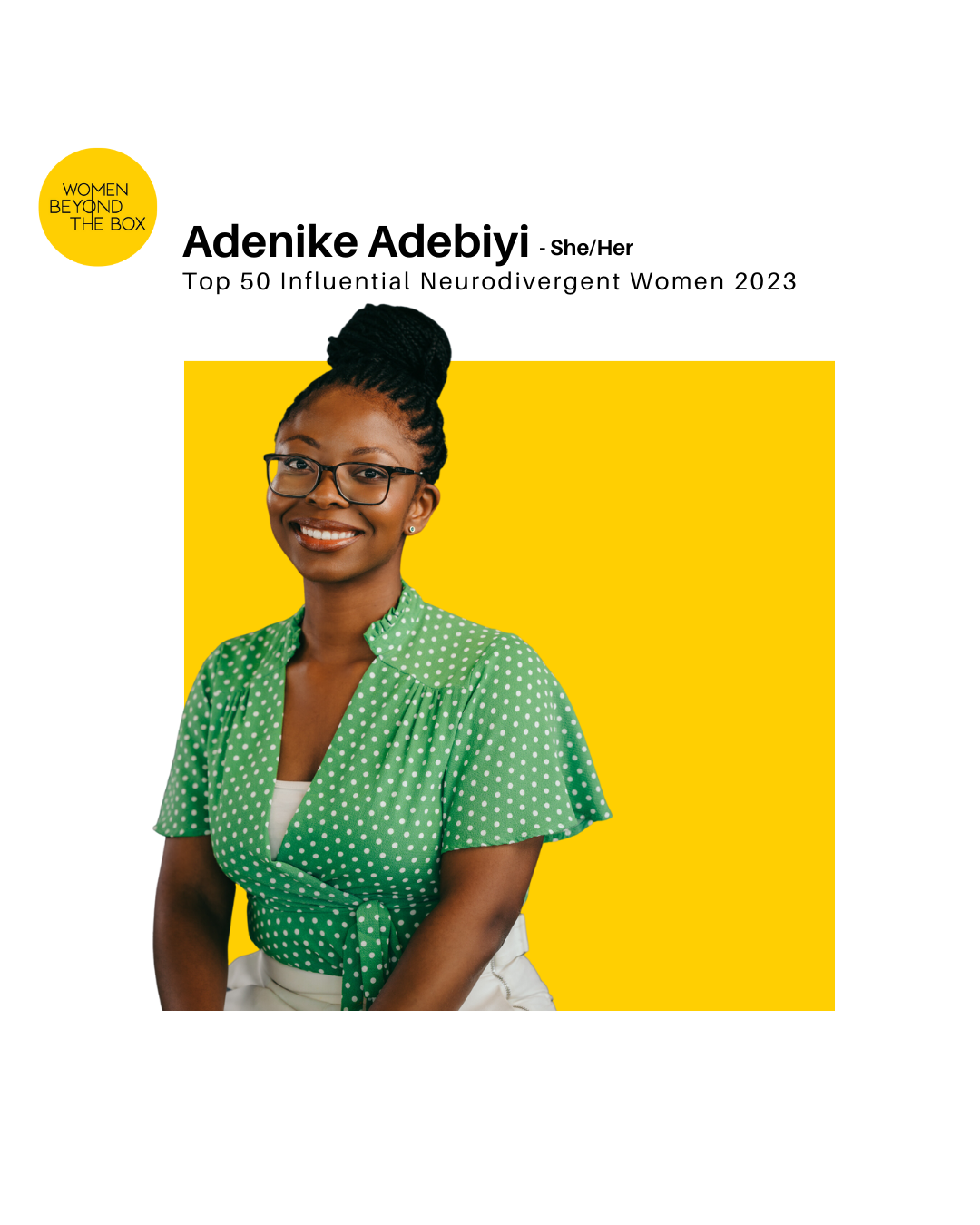
It was only last year that I publicly identified myself as part of the neurodivergent community, and that, too, only came about as a result of being named on the 2023 Top 50 Influential Neurodivergent Women list. Prior to then, I only disclosed my dyspraxic traits on a need-to-know basis due to fear of stigmatisation and stereotypes.
Undeniably, this fear has its roots in internalised ableism as I dreaded the thought of people running a Google search for dyspraxia and attributing characteristics to me which I may not actually have, since no two dyspraxic people are alike, and each individual person has unique challenges that may not be shared by others who are ascribed the same label.
On the other hand, my worries were not entirely internal and unfounded. Discrimination does happen and I, among others in the ND community, have experienced it. In the workplace, in education, in places of worship, in life.
Yet as I wrote in my profile for Women Beyond the Box, the organisation behind the Influential Neurodivergent Women list:
People fear or ridicule what they do not understand. Being discriminated against comes with the territory, but so does strength, stamina and fierce determination. Lean into it. That’s where your power is found.
Now, I talk about neurodiversity with a lot more courage and ease, leading by example to increase recognition of the variety of ways there are to process the world and engage with it (i.e. the definition of neurodiversity).
My journey to diagnosis
For Neurodiversity Celebration Week (March 18th-24th), I was commissioned by Disabled Students UK, with whom I am a Mental Health and Neurodiversity consultant, to speak on a panel about Neurodiversity in Higher and Further Education.
Neurodiversity Celebration Week is a worldwide initiative that challenges stereotypes and misconceptions about neurological differences. It aims to transform how neurodivergent individuals are perceived and supported by providing opportunities to recognise the many talents of neurodivergent individuals, while creating more inclusive and equitable cultures that celebrate differences and empower every individual.
For perhaps the first time, or one of the first times, I publicly spoke about my journey to diagnosis as a twenty-something in the middle of an undergraduate degree. A relatively late diagnosis, which has its upsides and downsides. I am thankful that I was raised with no preconceptions about my capabilities, which can be an unfortunate byproduct of early diagnosis, as Tumi Sotire, The Black Dyspraxic, experienced.
As a child, I was very active and sporty. I played for my championship-winning school netball team and I captained my class cheerleading squad. I also played football terribly, but that doesn’t matter because I had the confidence to try.
Nonetheless, I did have my struggles with certain tasks, so I did feel some relief about having a label to describe those challenges and use to seek out advice and support. Add to that the rollercoaster of emotions I felt because of internalised ableism and cultural stigmas around disability, and it’s an understatement to say that coming to terms with my diagnosis was a difficult thing on its own.
behind every late diagnosed woman
Jessica Jocelyn, girl (remastered)
is a little girl
who knew this world
was never made for her
but could never explain why.
Attitudes and adjustments
During the panel, I also spoke about some positive experiences I had with reasonable adjustments and support provided by the institutions I was studying at. These included additional time and rest breaks during assessments, as well as extra printing credits, advance access to learning materials, and permission to make audio recordings.
Additionally, I raised the importance of addressing social and cultural attitudes towards disability and neurodiversity as the inescapable backdrop for the current overall state of reasonable adjustments.
My assertion proved right in light of the recent disappointing remarks by Prime Minister Rishi Sunak about “sick note culture”, a phrase which rubs me entirely the wrong way. As with so-called “compensation culture” in discussions about taking legal action against wrongdoing, it’s unbelievably tone-deaf to skirt over the circumstances that give rise to these actions, and focus instead on blaming those affected by them.
Attitudes like that create barriers for neurodivergent people, whether they are formally diagnosed or self-diagnosed, who may be in need of support but who either fear not being believed or taken seriously. When you fear your request for help will be met with derision or resistance, why bother asking at all?
It’s no wonder why there are greater rates of anxiety and depression among people who are autistic, dyspraxic or who have ADHD. It can be lonely navigating a world in which your very real struggles are disbelieved or disregarded by others.
Intersectionality and neurodiversity
For International Women’s Day, I spoke as part of a Celebrating Neurodivergent Women panel hosted by workplace disability and neurodiversity support organisations SIC and Send It To Alex. We exchanged stories of our personal experiences and the challenges we faced due to both gender and neurodivergence, and for me, race/ethnicity as well. Similarly, at This Can Happen Global‘s Roundtable on Neurodiversity, I spoke about the unique experiences of Black neurodivergent professionals.
So, what are those challenges?
Well, the language of neurodiversity has only recently entered widespread public consciousness. So, lack of awareness and understanding is an issue for everyone. However, Black people are often misdiagnosed or underdiagnosed due to both structural and cultural factors.
For example, in schools, Black children with undiagnosed autism or ADHD may be treated as being “problem” children with behavioural issues who need to be punished, isolated or excluded rather than understood and supported. The children who slip through the cracks are likely to receive diagnoses later in life, if at all. Some might grow to make the best of their dealt cards, like me, while others might not be so fortunate. In the worst of cases, they may end up institutionalised or incarcerated.
There are also barriers to support from stigma, shame and spirituality. Neurodivergence may be misattributed to spiritual issues to be prayed away or ritually cast out, rather than medical conditions to be treated and accommodated. As a result, neurodivergent people may be looked down on as weak, personal failures, or spiritually inadequate, which may discourage them from seeking support, especially if they don’t know where to find it.
These are the same obstacles to finding support for mental health conditions, which I wrote about in my ‘Bounce Black’ article for Freuds.
Leading and learning by example
As a young Black neurodivergent woman, I have wrestled with a lot of the things previously described. It also took me longer than it should have to write this article because of residual hesitation about this topic (I started writing in April). Yet as a young Black neurodivergent woman and social entrepreneur, I feel a responsibility to live by example.
If I want to see less misdiagnosis and misattribution, I need to do what I can to help create sound awareness of, and compassionate approaches to, neurodiversity. So, I created a resource guide on ‘Understanding Neurodiversity‘ tailored to Black people.
If I want to see less ND people struggle with stigma and shame, I must own my journey and my brain with pride. So, I’m writing an article about it (the one you’re currently reading) and more readily identifying myself as ND in public discourse.
If I want to see less discrimination and false perceptions about neurodivergence, I need to make it known that everything that I have achieved has come from the same brain that works a bit differently to others’. What’s there to look down on?
In short, I need to be free and I need to be me.
That means owning all of my journey, with its hard moments and its highs.
That means not letting others place limitations on me, or boxes around me, that God didn’t put there.
That means being willing to try things which, on paper, should be really difficult for me to achieve, but doing it anyway because mastery is possible with persistence.
That means not being afraid to fail or get things wrong, embarrass myself or take longer than others with certain tasks.
Above all, it means embodying the reality that being neurodivergent is not at odds with being young, gifted and Black.
Thankfully, I think I’m off to a great start!


Leave a comment