
The Bounce Black Team
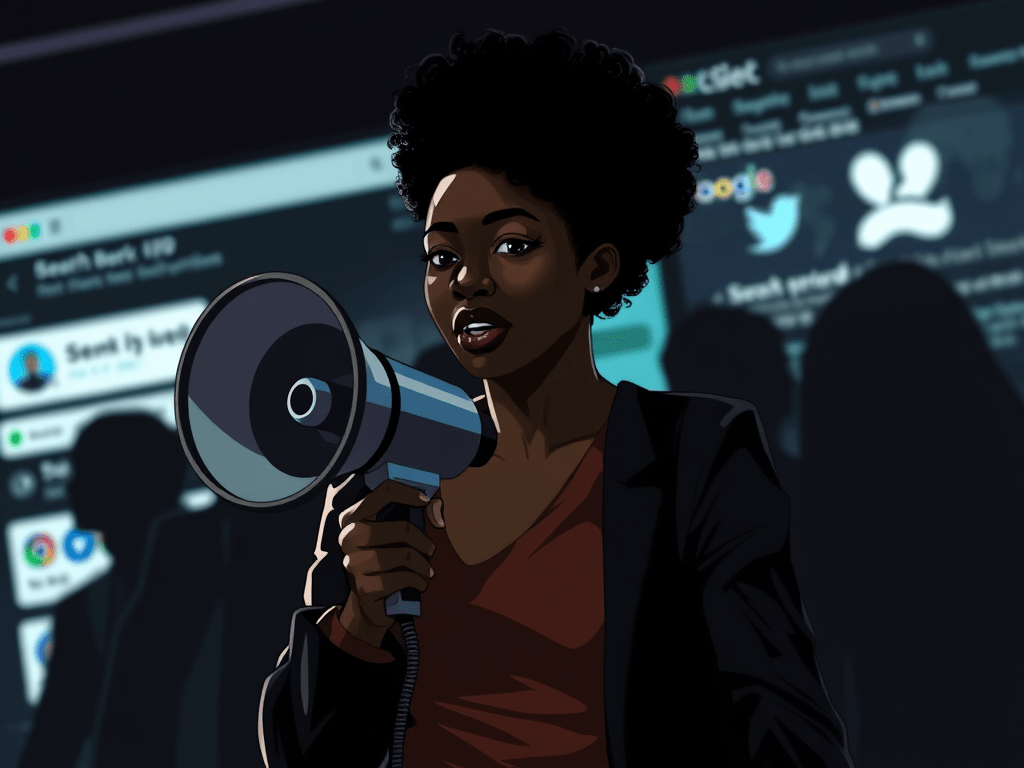
In the digital age, truth can be hidden not by erasing it, but by burying it. A growing number of victims of organised harassment are raising the alarm about how search engines appear to down-rank credible survivor-led resources while boosting dismissive or misleading content.
A stark example of this is how Bounce Black’s Surviving Organised Harassment guide is being buried beneath a Wikipedia article on “gang stalking” that does not even include the term “organised harassment.” Instead, the Wikipedia article characterises it as a persecutory belief, which is symptomatic of paranoid delusions.
This is not accidental. It is part of a wider pattern of suppression, repression, and disinformation designed to distort public understanding, discredit victims, and uphold systems of abuse.
Organised harassment is not simply a fringe conspiracy or the product of delusion. It is a widely used method of social and institutional control, often used to punish whistleblowers, silence dissent, or enact vendettas with impunity.
We urge readers to explore our All iZ On Me campaign, which exposes the abuse of intelligence, surveillance, and policing powers in democratic societies. Inspired by the legacy of Black activists who were committed to truth-telling, this campaign lifts the veil on how state and corporate power can collude to suppress individuals through covert means.
It’s Time to Speak Up
If you are a survivor of organised harassment, retaliation, or revenge-for-hire schemes, your voice matters. We invite you to:
- Use our Impact Statement Template to document your experience clearly and safely.
- Share your story with trusted allies, communities, and organisations.
- Sign and share Michelle Igunbor’s petition calling for a Congressional Investigation into the Non-Investigative Subset of the FBI’s Terror Watchlist Database, which has been used to target innocent civilians without due process. Sign the petition here
- Contact your local MPs or elected representatives and demand greater transparency and accountability around intelligence and surveillance powers. You can find a template letter here
Disinformation Is a Weapon
Disinformation doesn’t just confuse the public—it harms survivors. When the dominant narrative frames organised harassment as a symptom of mental illness without nuance, it invalidates those who are being harmed.
While it is crucial to acknowledge that trauma and severe mental illness can lead to persecutory beliefs, it is equally important not to pathologise credible reports of systematic, targeted abuse.
Organised harassment is characterised by:
- Highly uniform tactics used across different nations and communities.
- Clear patterns of retaliation following whistleblowing, legal action, or public dissent.
- The involvement of institutions or community figures with influence and access.
Survivors from all over the world—despite never having met—describe nearly identical experiences: home intrusions with no sign of forced entry, psychological tactics meant to destabilise, character assassination campaigns, and covert surveillance, and more.
These are not isolated incidents; they reflect a pattern.
What You Can Do
- Stay informed. Read survivor-led resources like the Surviving Organised Harassment guide.
- Share information responsibly, and avoid sensationalist content that discredits or distorts survivors’ experiences.
- Challenge disinformation when you see it—especially when it comes from “authoritative” platforms that ignore or erase victim testimony.
- Stand with victims. Public support and solidarity are powerful tools against silence and repression.
Organised harassment thrives in secrecy and disbelief.
It’s time to break that silence, centre the voices of the targeted, and push for systemic change.
Visit All iZ On Me to learn more and join the movement.

Leave a comment