
By Nikki Adebiyi, Founder, Bounce Black
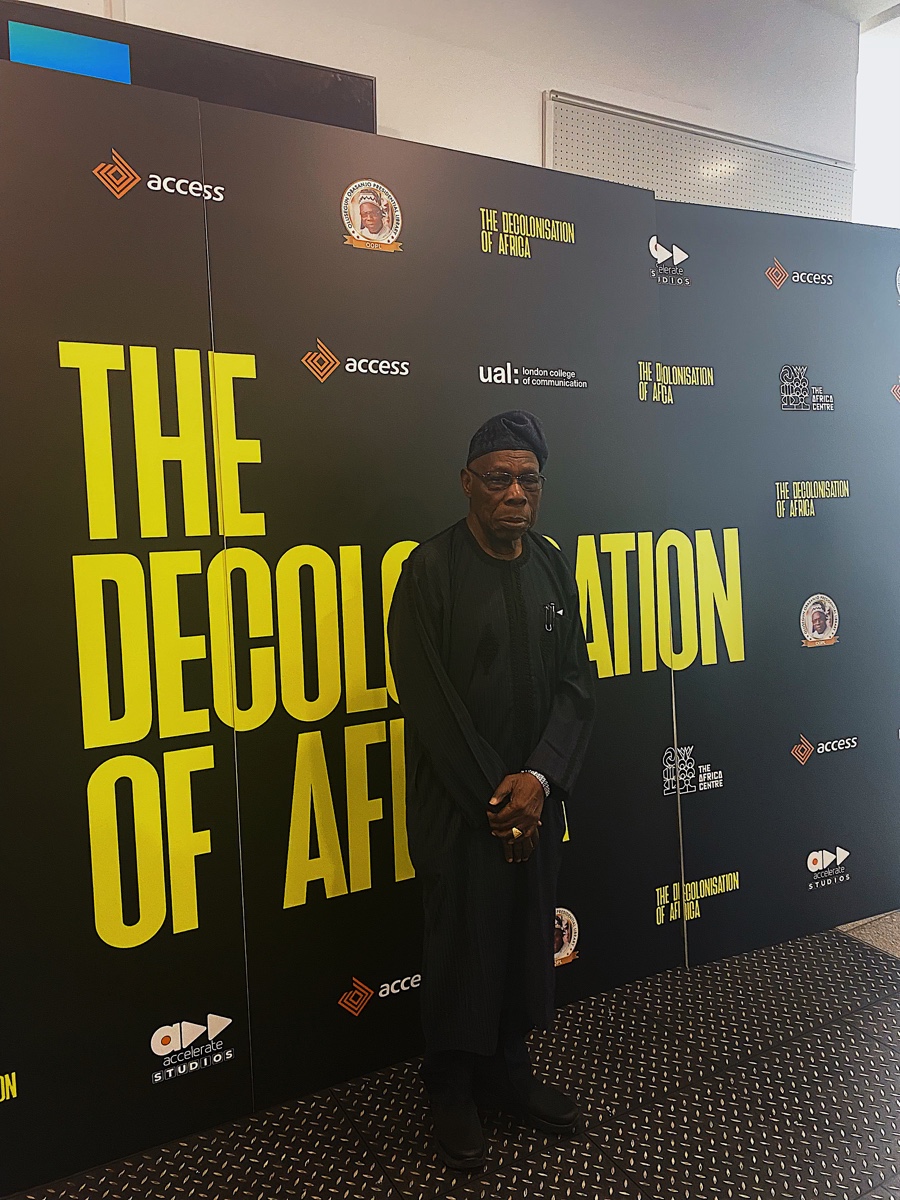
A couple weekends ago, I had the immense honour of attending a special screening of The Decolonisation of Africa, hosted at The London College of Communication. The event featured a powerful Q&A with one of the key contributors to the series: His Excellency Chief Olusegun Obasanjo, former President of Nigeria.
The event was a profound reminder of the power of reclaiming history and the urgency of continuing the work of liberation, both in Africa and across the diaspora.
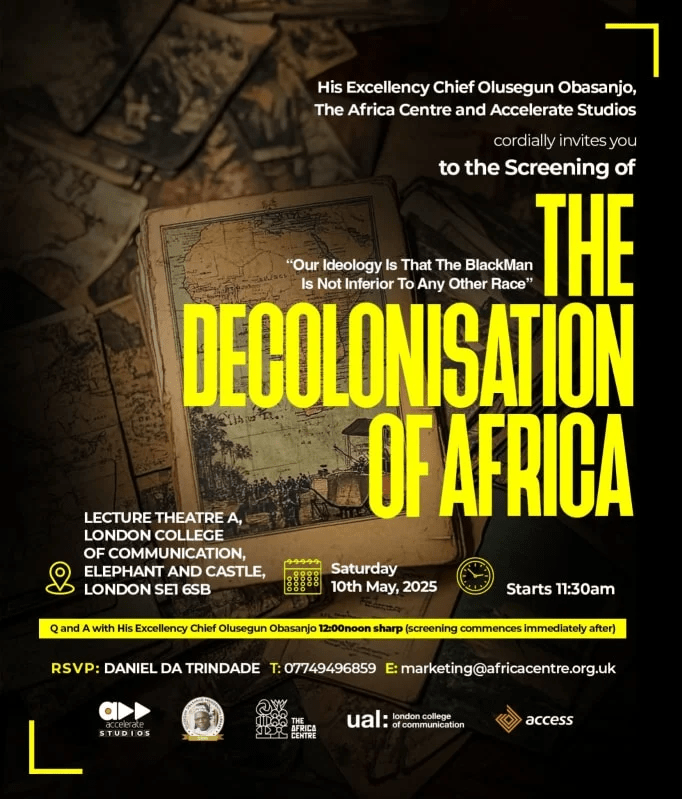
A Film Rooted in Truth, Courage and Legacy
Commissioned by the late Dr Herbert Wigwe and produced by Accelerate Studios, The Decolonisation of Africa is a heartfelt and compelling documentary series that delves into the continent’s layered and painful history. From the transatlantic slave trade to European colonial rule, and ultimately to the fight for independence, the series provides a gripping narrative of Africa’s struggle and strength. It does not shy away from complexity or nuance. Instead, it embraces it, offering viewers a deep and necessary education on the forces that have shaped the modern African continent.
What makes this series particularly powerful is its grounding in African voices and lived experience. Featuring insights from influential figures such as Chief Olusegun Obasanjo, H.E. Joaquim Chissano (former President of Mozambique), Lord David Owen, Baroness Lynda Chalker, and the late Chief Mangosuthu Buthelezi, the film offers a multi-faceted view of Africa’s journey toward self-governance. These accounts highlight not only the political strategies and diplomatic struggles of the time, but also the human spirit and community mobilisation behind the movements.
“Africa Is of Age”
A defining moment came when President Obasanjo said, “Africa is of age.” This was more than a soundbite, it was a declaration. Africa is not emerging; it has arrived. It is no longer waiting for validation from the West. It is leading, building, healing, and redefining its identity on its own terms.
But with that coming of age comes responsibility: to tell our stories truthfully, to teach our histories accurately, and to continue the work our ancestors began. Decolonisation is not only a political process; it is an intellectual, cultural, personal and spiritual one. It is about shifting the centre of gravity, not only in governance, but in how we understand knowledge, power, identity, and belonging.
Why This Film Matters For Africa and the Diaspora
At Bounce Black, our mission is to support Black people in thriving in wellbeing, identity, and work. To do that, we must understand the systems that have shaped us, and the legacies we’ve inherited.
The Decolonisation of Africa reminds us that our past is not separate from our present. The racism, marginalisation and underdevelopment that many Black and African-descended communities face globally today are not accidental, they are the residue of centuries of extractive systems and exported white supremacy.
For those of us in the diaspora, this series also invites a reconnection. To learn these stories is to reclaim what colonial education denied many of us. It is to recognise that the liberation of the continent is linked to our own. That we, too, are part of Africa’s unfolding story.
The Obasanjo My Grandfather Knew
Admittedly, I attended this event for my mother’s benefit, as she shares a special connection to him, and I wanted to surprise her with an experience I knew she would find invaluable: reconnection to positive memories. However, the event turned out to be even more impactful for me personally.
As I shared on my personal Instagram:
Some moments as they’re experienced last mere seconds, but have the power to make an impression for a lifetime.
That’s what happened when I met His Excellency Chief Olusegun Obasanjo aka OBJ. A man known to the World as the former Military Head of State and President of the Federal Republic of Nigeria. A man known to me as my grandpa’s friend.
Like my grandpa—a mathematician, United Nations scholar, and the Director of Statistics who published some of Nigeria’s earliest statistics—over the years, I’ve learned about President OBJ in fragments:
That he and my grandpa attended the same school, though my grandpa was a year above him, which earned him the nickname “Senior”.
That my grandfather heard the shots which claimed the life of the then-Military Head of State, Muhammed Murtala (after whom the main airport in Lagos is named), to whom OBJ was Chief of Staff at the time. My grandfather was in the area, so he made every effort to reach Obasanjo and instruct him to change out of his military attire into “mufty” or casual clothes. After that, he and my grandfather quietly snuck out, left by car to the “boys’ quarters” or servant’s quarters on my grandpa’s property—my mother’s childhood home in Nigeria—where OBJ lived in hiding for some time. This was before he became president, but the story is apparently mentioned in one of OBJ’s autobiographies.
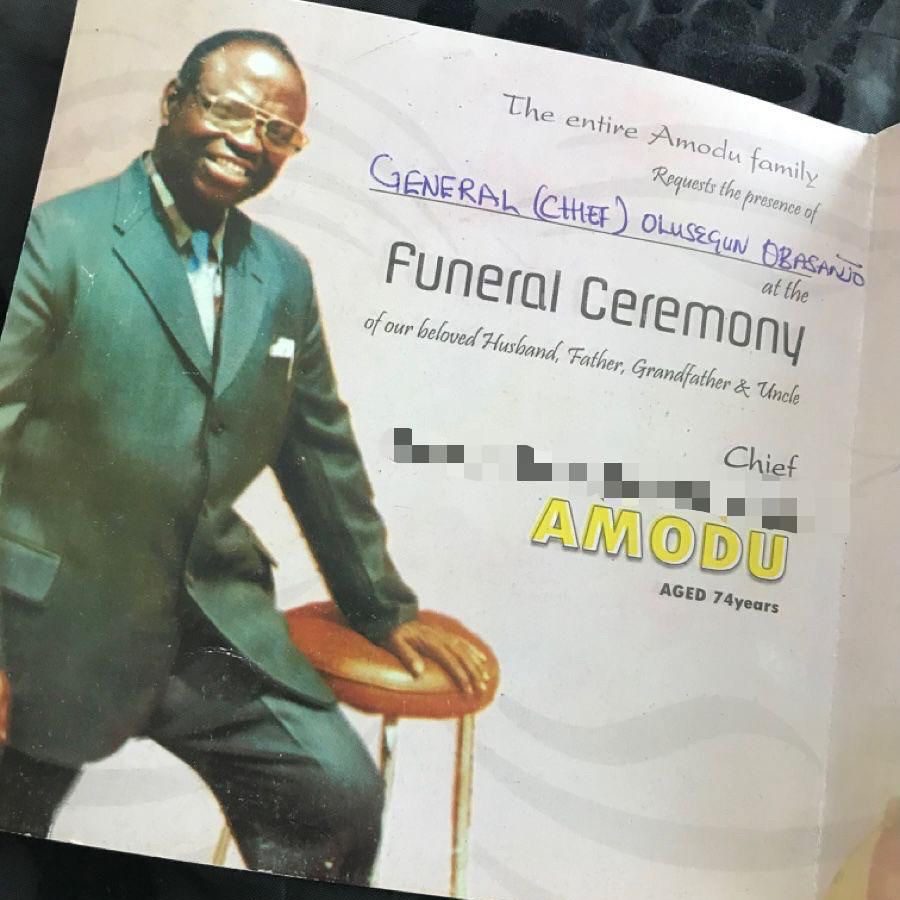
When my grandpa transitioned, President OBJ was invited to his funeral but sadly couldn’t attend because the funeral of the then-President was the same day. Duty called, but I believe he did pay a personal visit to my grandpa’s home and sent regards to the family.
All of these stories came to life in a profound way for me when I met President OBJ at the screening of ‘The Decolonisation of Africa’. From hearing him kick off the event with a case for reparations, to learning about his role in early decolonisation—something in me healed that day.
It finally clicked for me why pan-Africanism is necessary. The struggle against white supremacy in the diaspora will not succeed without dismantling its exports to our ancestral homelands. This is the baton we are handed. It is my duty and delight to keep on running.
Bring the Conversation to Your Community
The Decolonisation of Africa is more than a documentary, it’s a conversation starter, a curriculum, a catalyst. It’s a call to action for my generation and younger to take up the baton and finish the work our elders began.
I want to see educators, community leaders, organisations and cultural institutions host screenings and use this series as a tool for deeper understanding and collective growth.
If you’re interested in exploring how to bring this to your classroom, workplace, platform or community space, please get in touch.
Let’s continue the work of decolonising minds, reclaiming our narratives, determining our destinies, and honouring our collective memory.
Credits
- Title: The Decolonisation of Africa
- Commissioned by: the late Dr Herbert Wigwe
- Produced by: Accelerate Studios
- Hosted by: The Africa Centre, London
- Featuring: Chief Olusegun Obasanjo, H.E Joaquim Chissano, Lord David Owen, Baroness Lynda Chalker, the late Chief Buthelezi, and many more.
- Learn more: www.africacentre.org.uk

Leave a comment