
By Bounce Black
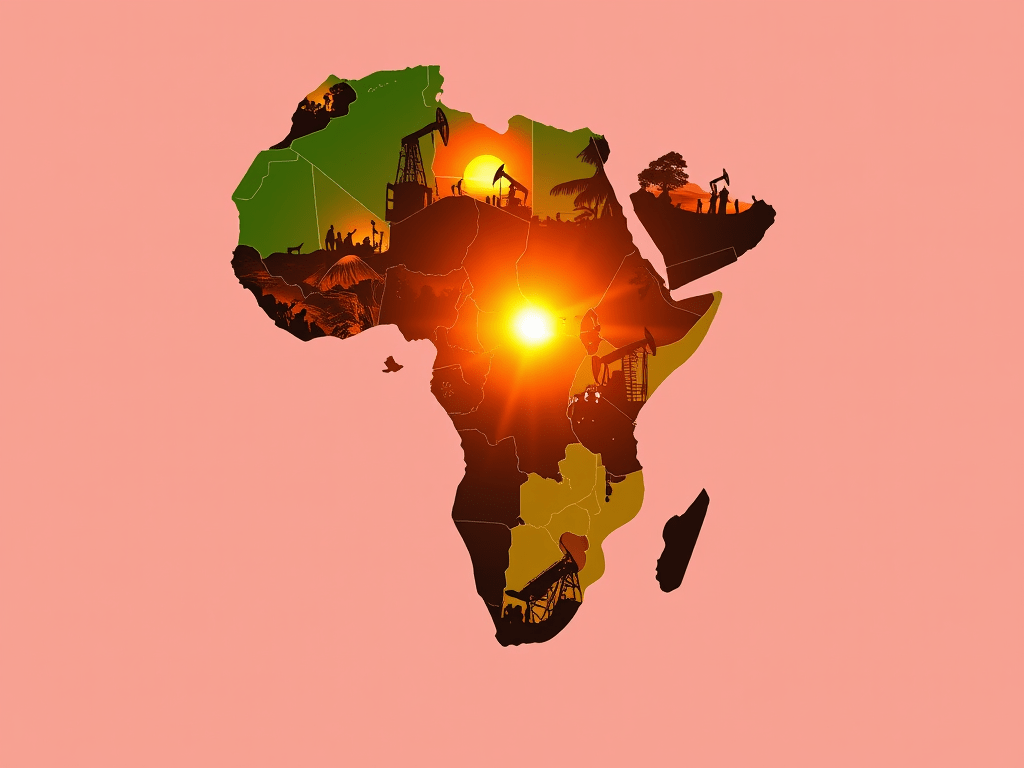
In Part One, we explored some of the pressing challenges shaping Africa’s future: conflicts, economic struggles, climate disasters, and political unrest affecting key countries across the continent. But Africa is vast, and its story is much larger than any single snapshot.
This second part dives deeper, highlighting additional countries where complex crises continue to impact millions of lives. From fragile political transitions and environmental degradation to social upheaval and youth-led movements, these nations illustrate the diversity and urgency of Africa’s ongoing struggles and resilience.
By broadening our understanding beyond headlines, we can better appreciate the shared and unique challenges facing African peoples today. And as members of the diaspora, our role remains critical—whether through amplifying voices, advocating for justice, or supporting community-led solutions on the ground.
A Country-by-Country Look: Continued
🇦🇴 Angola: Oil Wealth & Poverty Divide
Angola is sub-Saharan Africa’s second-largest oil producer, but most of its population lives in poverty as corruption and unequal development remain major concerns.
Decades of civil war (1975–2002) followed by entrenched one-party rule left public services underfunded, youth unemployment high, and access to education poor. Rural areas lack basic infrastructure, and economic diversification remains slow while environmental degradation grows. The ruling MPLA party has been in power since independence in 1975, and protest and dissent are often met with repression, leaving many feeling shut out of the political process.
Do something: Follow and support youth-led movements calling for equitable governance and education reform.
🇧🇮 Burundi: Political Repression & Food Insecurity
Burundi remains one of the world’s poorest countries, with chronic food insecurity and limited access to healthcare and education. Political repression, media crackdowns, and a history of ethnic conflict has left deep scars and a deepened mistrust in leadership.
Droughts, floods, and other climate shocks are intensifying agricultural instability, particularly in rural areas, threatening livelihoods in a nation heavily reliant on subsistence farming.
Do something: Learn about and amplify the work of Burundi-based women’s and youth organisations.
🇨🇻 Cabo Verde (Cape Verde): Economic Vulnerability & Youth Migration
Cape Verde is politically stable but economically fragile. Youth unemployment is high, prompting migration abroad due to limited job opportunities. The country’s economy is heavily dependent on tourism and remittances, which makes it vulnerable to global shocks and economic downturns. The island nation is also vulnerable to climate change, particularly drought and rising sea levels.
Do something: Support initiatives promoting climate adaptation, economic diversification, sustainable tourism, and educational access for youth.
🇨🇫 Central African Republic: Conflict, Instability, and Humanitarian Crisis
The Central African Republic (CAR) has faced ongoing armed conflict since 2013, when a civil war broke out between government forces and various rebel groups. Despite peace agreements, violence remains widespread, especially in rural areas, leading to mass displacement and severe insecurity.
Over half the population depends on humanitarian aid, with limited access to healthcare, education, and basic services. Armed groups continue to exploit the country’s mineral resources, fuelling the conflict and undermining development. The state’s capacity to govern remains weak, particularly outside the capital, Bangui.
Do something: Support conflict resolution efforts and humanitarian organizations delivering healthcare, education, and food security programs in CAR. Amplify the work of grassroots peace advocates and civil society actors.
🇹🇩 Chad: Climate Disruption and Political Instability
Since the assassination of President Idriss Déby in 2021, after decades under authoritarian rule, Chad is currently governed by a military junta. One that stifles opposition and consequently delays the democratic transition.
Chad faces a confluence of crises, including a shrinking Lake Chad due to climate change, and armed conflict and displacement continue to disrupt life in rural and border communities. The political instability, regional conflicts (particularly in the Lake Chad basin), and displacement have deepened their humanitarian crisis.
Millions remain in need of food, water, and healthcare. Its education systems are under strain while civil liberties remain restricted. International attention is limited despite urgent needs.
Do something: Learn more about the Lake Chad crisis and support community-based climate resilience projects.
🇨🇬 Republic of Congo (Congo-Brazzaville): Authoritarianism & Economic Strain
While less internationally covered than its neighbor DRC, Congo-Brazzaville faces ongoing issues of inequality, repression, and lack of media freedom.
Despite being rich in oil and forest resources, Congo-Brazzaville suffers from high debt, poverty, and authoritarian rule, stalling the nation’s development. Civic freedoms are limited, political opposition is stifled, and development is uneven as the ruling elite benefits from oil revenues while large swathes of the population experience underdevelopment.
Concerns about environmental damage from deforestation and pollution are rising as youth face unemployment and few opportunities to shape their future.
Do something: Connect with Congolese activists working on transparency, press freedom, and youth empowerment.
🇩🇯 Djibouti: Foreign Military Presence & Local Exclusion
Djibouti is home to several foreign military bases due to its strategic Red Sea location. However, everyday citizens see few benefits from this international presence.
Human rights concerns include suppression of dissent and limited press freedom as the government tightly controls political space and media.
Despite GDP growth, inequality and unemployment persist. Climate stress and limited water resources worsen the challenges, especially for vulnerable communities.
Do something: Support local advocacy for fair labour conditions and greater accountability.
🇬🇶 Equatorial Guinea: Oil-Rich but Repressed
Equatorial Guinea has one of the highest GDPs per capita in Africa, as one of the most oil-rich countries in Africa, yet the majority of its population lives in poverty. Basic services like healthcare and education are underfunded.
The government, ruled by one family since 1979, faces accusations of widespread corruption and human rights violations as many activists operate in exile. The authoritarian regime limits press freedom, civil liberties, and opposition. Activists face severe risks, and change is slow.
Do something: Support journalism and exiled activism focused on democratic reform in Equatorial Guinea.
🇪🇷 Eritrea: Repression and Mass Exodus
Eritrea is one of the world’s most closed-off nations, having faced decades of isolation, repression, and indefinite national service, likened to forced labour.
Civic space is tightly controlled, with no independent press, and a government that routinely imprisons dissidents. The government tightly controls all aspects of life, leaving citizens with few avenues for expression or reform.
Consequently, thousands flee annually to escape repression and lack of opportunity, seeking safety and freedom abroad. This results in another global diaspora community shaped by trauma.
Do something: Support Eritrean-led diaspora networks pushing for political reform and refugee protection.
🇬🇦 Gabon: Post-Coup Uncertainty and Environmental Risk
In 2023, Gabon underwent a military coup that ended over five decades of Bongo family rule. Since then, the nation has been at a political crossroads.
The country is rich in oil and biodiversity but suffers from long-standing corruption and inequality, weakening its institutions. Environmental concerns and Indigenous rights are also growing issues in Gabon’s interior.
Whether the new leadership will usher in meaningful reform remains unclear. Civil society leaders are cautiously hopeful for reform but remain wary of repeating history.
Do something: Support local initiatives protecting forests and promoting democratic accountability.
🇬🇲 The Gambia: Transitional Justice & Development Gaps
After two decades under a dictatorship, The Gambia is navigating a fragile democratic transition. While the 2016 transition brought hope, progress has been slow, particularly in delivering justice for human rights abuses under the former regime.
Gambian institutions and infrastructure remain weak, and the country struggles with poverty, youth unemployment, and limited access to education and healthcare. Many citizens, especially youth, remain disillusioned, with some opting to migrate due to a lack of opportunity as development gaps persist.
Do something: Amplify the work of truth commissions and justice reform organisations in The Gambia.
🇬🇼 Guinea-Bissau: Political Fragility & Drug Trafficking
Guinea-Bissau is often overlooked, but it is plagued by political instability, poverty, drug trafficking, and weak institutions.
Frequent power struggles and weak institutions make governance difficult, which has hindered development. Public services are scarce, and the country remains heavily aid-dependent and underdeveloped.
Do something: Support local anti-corruption campaigns and community-based development.
🇰🇪 Kenya: Political Tensions and Environmental Challenges
Kenya faces significant political tensions fuelled by contested elections, ethnic divisions, and corruption allegations. These issues exacerbate social divisions and undermine trust in institutions.
Additionally, Kenya is vulnerable to climate change impacts such as droughts and floods, which threaten agricultural livelihoods and food security for millions, especially in arid and semi-arid regions. Urban areas grapple with inequality and informal settlements, while youth unemployment remains high.
Do something: Support civic education programs and environmental initiatives working to build resilience in vulnerable communities.
🇱🇸 Lesotho: Economic Hardship and Health Crises
Lesotho, a small mountainous kingdom within South Africa, struggles with chronic poverty and high unemployment rates, particularly among its youth. The country also faces a severe health crisis with one of the world’s highest HIV/AIDS prevalence rates, impacting life expectancy and economic productivity. Access to quality healthcare and education remains limited, especially in rural areas.
Despite these challenges, grassroots organizations, especially women-led groups, are at the forefront of community development and health advocacy, working tirelessly to improve living conditions.
Do something: Support HIV/AIDS awareness campaigns and women’s empowerment initiatives in Lesotho.
🇱🇷 Liberia: Post-Conflict Recovery & Corruption
Africa’s oldest republic, Liberia is still recovering from and rebuilding after two brutal civil wars and the 2014 Ebola outbreak. These events devastated infrastructure, weakened public institutions, and left deep societal scars.
Today, many Liberians live in poverty, with limited access to healthcare, quality education, and stable employment. Many also lack access to electricity and clean water. Young people make up a large part of the population but have few economic opportunities.
Corruption remains a persistent issue, eroding public trust in government.
Do something: Elevate stories of local resilience and innovation to attract broader support.
🇱🇾 Libya: Fragmentation and Conflict
Since the fall of Muammar Gaddafi in 2011, Libya has been mired in political fragmentation and armed conflict, with rival factions vying for control. This instability has led to the breakdown of state institutions, disrupted oil production (the country’s main revenue source), and created a humanitarian crisis with many internally displaced persons and refugees.
Migrants crossing Libya face extreme risks, including detention and abuse. Civil society and international efforts strive to mediate peace and restore governance, but the path remains uncertain.
Do something: Stay informed about Libya’s humanitarian situation and support organizations aiding refugees and displaced persons.
🇲🇬 Madagascar: Environmental Vulnerability and Poverty
Madagascar faces extreme environmental vulnerability, including deforestation, soil erosion, and recurring droughts and cyclones. These natural challenges exacerbate poverty and food insecurity for many communities dependent on subsistence farming. Limited infrastructure and healthcare access further hinder development.
Do something: Support conservation projects and sustainable agriculture initiatives in Madagascar.
🇲🇼 Malawi: Food Insecurity and Health Challenges
Malawi, one of the world’s poorest countries, struggles with recurring food shortages due to droughts, floods, and poor soil fertility. Malnutrition rates remain high, especially among children. Health challenges include a high burden of HIV/AIDS and malaria. Education access and economic opportunities are limited in rural areas.
Do something: Support local organizations focused on food security and healthcare access in Malawi.
🇲🇷 Mauritania: Slavery Legacy and Human Rights Issues
Mauritania continues to struggle with the legacy of modern slavery and discrimination, despite legal prohibitions. Ethnic tensions and human rights abuses persist, with marginalized groups facing economic exclusion. The country also deals with desertification and limited water resources impacting rural livelihoods. Activists and human rights organizations work courageously to combat slavery practices and promote social justice, often in difficult conditions.
Do something: Amplify the voices of Mauritanian human rights defenders and support anti-slavery campaigns.
🇲🇺 Mauritius: Environmental Risk & Economic Dependence
Mauritius is viewed as a model of political stability but faces rising inequality and environmental risks, including oil spills and coral degradation. The tourism industry dominates, making the economy vulnerable amid concerns about corruption and doubts about long-term sustainability.
Movements to protect the coastline and ensure inclusive economic development are gaining traction, especially among the island’s youth, for whom opportunities are limited.
Do something: Promote Indo-African and Creole-led cultural preservation movements.
🇲🇦 Morocco: Political Stability with Social Struggles
Morocco enjoys relative political stability compared to many of its neighbours but grapples with socioeconomic disparities, especially in rural and marginalized areas. High youth unemployment, limited political freedoms, and human rights concerns persist. The Western Sahara conflict remains a contentious regional issue.
Do something: Support independent media and social justice initiatives in Morocco.
🇲🇿 Mozambique: Conflict and Climate Crises
Mozambique faces armed insurgency in its northern Cabo Delgado province, causing mass displacement and humanitarian distress. The country also suffers from devastating cyclones and flooding, impacting infrastructure and food security. Despite rich natural resources, poverty and inequality remain widespread.
Do something: Support humanitarian relief and peacebuilding efforts in northern Mozambique.
🇳🇦 Namibia: Inequality and Land Reform Debates
Namibia, despite relative political stability and wealth, grapples with deep inequality stemming from its colonial and apartheid history. Land reform remains a hotly debated issue as many Namibians seek restitution and equitable access to land and resources. Youth unemployment and rural poverty persist. Civil society organisations actively engage in advocacy for social justice, land rights, and environmental sustainability.
Do something: Support land rights movements and youth empowerment projects in Namibia.
🇷🇼 Rwanda: Post-Genocide Recovery and Governance
Rwanda has made remarkable progress since the 1994 genocide, with strong economic growth and social reconciliation efforts. However, concerns remain over political repression, media freedom, and human rights. The government’s focus on stability sometimes limits dissent.
Do something: Support initiatives promoting human rights and civic participation in Rwanda.
🇸🇳 Senegal: Democratic Progress Amid Economic Challenges
Senegal is praised for stable democratic institutions but struggles with youth unemployment and rural poverty. Political tensions occasionally flare around elections. Civil society and youth organisations play a key role in fostering democratic participation and social innovation.
Do something: Support youth empowerment programs and civic education in Senegal.
🇸🇨 Seychelles: Climate Risk & Inequality
The Seychelles faces the threat of rising sea levels, marine pollution and climate-linked economic shocks.
The tourism-heavy economy is vulnerable to global shocks, like COVID-19, and youth unemployment is a growing concern as the cost of living rises.
Do something: Amplify local environmental champions.
🇸🇱 Sierra Leone: Post-Conflict Recovery and Health Challenges
Sierra Leone is rebuilding after a brutal civil war and the Ebola epidemic, which devastated health infrastructure and social trust. High youth unemployment and poverty remain critical issues. Efforts focus on improving education, healthcare, and governance transparency, with many diaspora members actively supporting national development.
Do something: Support education and health projects, and engage with Sierra Leonean diaspora networks.
🇸🇿 Eswatini: Authoritarian Rule and Economic Hardship
Eswatini remains an absolute monarchy with limited political freedoms and significant socioeconomic inequalities. Protests demanding democratic reforms have been met with state violence. Economic challenges and youth unemployment fuel unrest.
Do something: Amplify calls for democracy and support grassroots human rights campaigns.
🇹🇿 Tanzania: Political Restriction and Economic Inequality
Tanzania faces growing political restrictions and suppression of dissent. While economic growth is steady, inequality and rural poverty persist. Civil society groups and opposition voices often face intimidation but continue to push for transparency and inclusion.
Do something: Support independent media and democracy advocacy in Tanzania.
🇺🇬 Uganda: Political Repression and Youth Challenges
Uganda grapples with political repression, including crackdowns on opposition and media. Youth unemployment and poverty are high, despite economic growth. Youth-led movements and civil society organizations continue to fight for greater freedoms and social justice.
Do something: Support organisations advocating for human rights and youth empowerment in Uganda.
🇿🇲 Zambia: Economic Struggles and Governance Issues
Zambia faces debt distress, inflation, and political tensions. Corruption undermines service delivery and development. Youth unemployment is a growing concern. Despite these challenges, community groups and activists push for accountability and inclusive economic policies.
Do something: Engage with campaigns promoting transparency and youth entrepreneurship.
🇿🇼 Zimbabwe: Economic Collapse and Political Repression
Zimbabwe continues to struggle with economic collapse, hyperinflation, and authoritarian governance. Land reform policies have had mixed outcomes, and political opposition faces harsh repression. Many Zimbabweans live in poverty, fueling mass migration. Civil society remains active in advocating for democratic reforms and economic justice.
Do something: Support diaspora-led democracy and development initiatives.
The Story Continues, And So Must We
Across the continent, from Angola to Zimbabwe, the picture is complex. Africa is marked by resilience and resourcefulness, but also by crisis and injustice.
This second part of our series reveals just how interconnected these struggles are, often rooted in colonial histories, economic exploitation, political instability, climate shocks, and global neglect.
But this isn’t just about crisis.
It’s about seeing the continent not only as our place of origin, but as a place we are accountable to.
For the diaspora, these stories are not distant headlines.
They are family. They are legacy. They are responsibility.
Whether through amplifying voices, supporting local movements, investing in ethical initiatives, or simply staying informed, we all have a role to play.
Africa is not a monolith, and neither is the diaspora. But together, we can stand in active solidarity.
This is not the end of the story, it’s an ongoing call to action.

Leave a comment