
The Bounce Black Team
At the 5th session of the United Nations Permanent Forum on People of African Descent, one message came through clearly: young people of African descent are not just future leaders, they are rights-holders and changemakers now.
This framing matters.
Because too often, Black youth are spoken about in terms of deficits: barriers in education, limited access to opportunity, overexposure to systems of punishment, and underrepresentation in decision-making spaces.
These things are real, and they are systemic.
But they are not the full story.
Beyond Barriers: Recognising Agency
The Forum highlighted what many of us already know through lived experience:
Young people of African descent are actively shaping change in their communities, online, in workplaces, and across global movements.
They are:
- Organising and mobilising
- Creating new economic pathways
- Challenging harmful narratives
- Building communities of care and resistance
Yet, their ability to do so is often constrained by the very systems they are trying to transform.
To call young people “changemakers” without addressing structural inequality is incomplete. To address inequality without recognising agency is also incomplete.
Both must exist together.
Where Bounce Black Stands
At Bounce Black, this intersection is where we work.
Our programmes are grounded in a simple but powerful belief:
Black young people deserve not just access, but the tools, support, and environment to thrive.
Through initiatives like the Roots: Career Foundations Programme, we support Black students and early career professionals to:
- Navigate complex and often exclusionary systems
- Build confidence and clarity in their career pathways
- Develop skills that translate into real opportunities
- Prioritise wellbeing in the face of racialised experiences
This is more than standard professional development. It is structural intervention at the level of lived experience.
From Global Dialogue to Local Impact
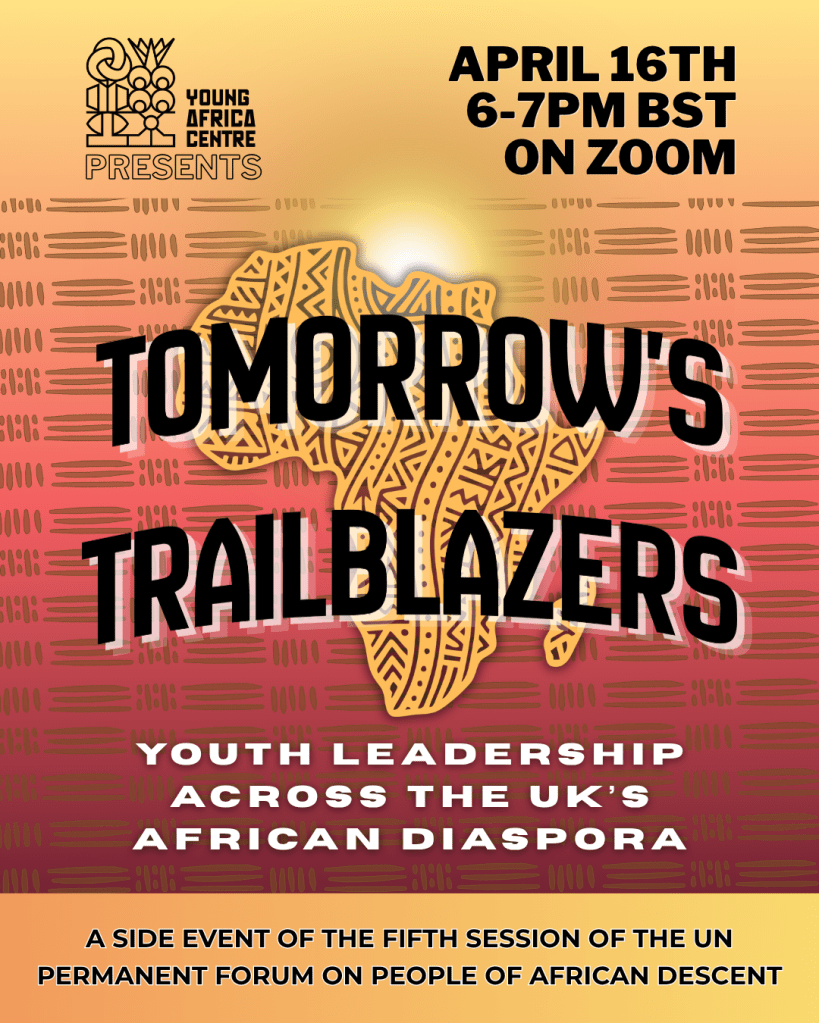
We were also featured in a Forum side event titled Tomorrow’s Trailblazers: Youth Leadership Across the UK’s African Diaspora hosted by our friends at the Young Africa Centre.
The virtual event showcased YAC, its collaborators and the collective impact of youth-led organisations in London, UK.
Our contribution focused on:
- The realities Black students and professionals face in education and employment
- The impact of racial trauma on confidence, performance, and progression
- The importance of holistic, trauma informed support
- The need to move beyond “access” towards sustainable thriving
We shared how community-led, culturally responsive programmes can:
- Bridge the gap between policy and lived experience
- Equip young people with both practical tools and internal resilience
- Create spaces where growth, healing, and ambition can coexist
The response reinforced something important, namely that this work is needed, and it resonates globally.
What Needs to Happen Next
If young people of African descent are to be truly recognised as rights-holders and changemakers, then:
1. Systems must change
Education, employment, and justice systems must move beyond performative inclusion towards structural transformation.
2. Investment must follow
Community-led organisations doing this work need sustained funding and support. (If you’re feeling generous, consider donating to our crowdfunder here)
3. Young people must be meaningfully included
Not as tokens, but as partners in shaping policy and decision making.
4. Wellbeing must be prioritised
Thriving is not just economic; it is emotional, psychological, and social.
From Recognition to Reality
The conversations at the Forum are important. They set the tone. They shape global priorities.
But the real test is what happens next.
At Bounce Black, we remain committed to ensuring that these global commitments translate into something tangible.
In classrooms, workplaces, and our everyday lives.
Because Black young people are already changemakers.
The question is whether the world will meet them with the support, recognition, and structural change they deserve.
At this point, we’re done asking.
We’re demanding it and building for ourselves.


Leave a Reply