
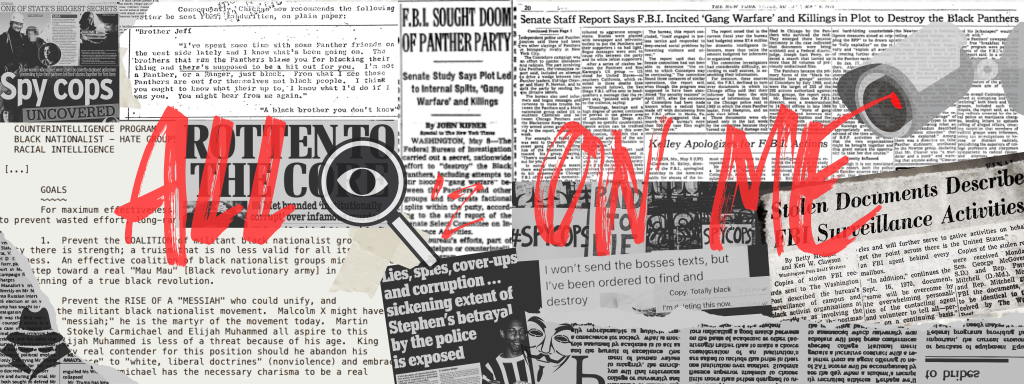
All iZ On Me:
Intelligence, Policing & the Abuse of Power
Inspired by Tupac Shakur’s All Eyez on Me, this campaign flips the meaning—highlighting how intelligence agencies and law enforcement have turned their gaze on activists, whistleblowers, and racial minorities through surveillance, infiltration, and organised harassment.
While intelligence and policing are meant to protect society, history shows they have been weaponised to silence dissent, undermine movements, and destroy lives. From COINTELPRO in the U.S. to spycops in the UK, these tactics have evolved—but the targets remain the same.
This campaign exposes the truth, educates the public, and mobilises action against the abuse of intelligence and policing powers. Keep reading to understand the history, tactics, and impact of weaponised surveillance—and what we can do to resist.
The History of Weaponised Policing and Intelligence
Weaponised policing and intelligence operations have a long history of being used to suppress political dissidents, racial minorities, journalists, activists, and whistleblowers. In both the UK and the US, intelligence agencies and law enforcement have been implicated in surveillance, infiltration, and harassment campaigns aimed at undermining individuals and movements that challenge the status quo.
COINTELPRO (USA): Targeting Civil Rights Leaders & Activists
One of the most infamous examples is the Counter Intelligence Program (COINTELPRO), a covert FBI operation from the 1950s to 1970s that sought to disrupt and neutralise civil rights organisations, leftist groups, and Black liberation movements.
Under COINTELPRO, activists such as Martin Luther King Jr., Malcolm X, the Black Panther Party, and the American Indian Movement were subjected to illegal surveillance, false criminal charges, intimidation, and character assassinations. FBI memos explicitly stated that the goal was to “prevent the rise of a messiah” who could unify Black resistance movements. This language, along with the tactics, were approved by then-FBI Director J. Edgar Hoover.
COINTELPRO used informants, disinformation, and psychological warfare to turn communities against their own leaders. Many who participated in these activities—whether as informants or complicit law enforcement officials—faced severe reputational damage when their roles were exposed.
Spycops & State Surveillance in the UK
In the UK, the government has similarly weaponised policing and intelligence against activists, particularly through undercover policing operations. The Special Demonstration Squad (SDS), later known as the National Public Order Intelligence Unit (NPOIU), embedded officers in activist groups for years, deceiving individuals into relationships, fathering children, and gathering intelligence on organisations such as anti-racism groups, environmental movements, and trade unions.
A significant number of those targeted were from racial minorities, including Black justice campaigners and families of victims of police violence. In 2020, an inquiry into “spycops” revealed that the Metropolitan Police had illegally spied on victims of racist attacks, including the family of Stephen Lawrence, a Black teenager murdered in a hate crime.
Modern-Day Surveillance & Community-Based Harassment
Today, mass surveillance, retaliatory policing, and “community-based” stalking (where regular citizens are recruited as informants or harassers) continue under different names.
Technologies such as predictive policing, facial recognition, and counterterrorism laws disproportionately target Black, Muslim, and migrant communities. Whistleblowers, journalists, and government critics continue to face intimidation, blacklisting, and harassment through various means.
Many participants in these illegal informant activities later face public disgrace, legal consequences, or personal regret. The exposure of COINTELPRO and the UK’s spycops scandal shows that government-led intimidation tactics inevitably come to light, leading to public outrage and, in some cases, legal accountability.
- Amnesty International: Predictive Policing & Racism
- The Intercept: Policy Spy on Civil Rights Activists
- EFF: Predictive Policing & Racial Bias
Zersetzung: Psychological Warfare & State Harassment
Zersetzung (German for “decomposition”) was a covert psychological warfare tactic used by the East German secret police, the Stasi, to silently destroy dissidents. Rather than direct violence, Zersetzung relied on manipulation, surveillance, and psychological destabilisation to break targets down over time.
Tactics of Zersetzung:
🕵️ Surveillance & Stalking – Invasive monitoring to instill paranoia.
🗣 Defamation & Isolation – Smear campaigns to ruin reputations and relationships.
⚠️ Workplace & Financial Sabotage – Job loss, blacklisting, and economic destabilisation.
🏠 Subtle Harassment – Home break-ins, tampered belongings, or staged “coincidences” to make victims doubt their own sanity.
Though Zersetzung was exposed after the fall of East Germany, similar psychological harassment tactics are still in use today—targeting whistleblowers, activists, and dissenters through modern surveillance and organised harassment networks. Understanding this history helps us recognise and resist these abuses today.
Typical Targets, Typical Tactics
Those most likely to be targeted by weaponised intelligence and policing include:
- 🎯 Whistleblowers – Individuals exposing corruption, misconduct, or abuses of power.
- 🎯 Activists & Community Leaders – Those advocating for racial justice, workers’ rights, or government accountability.
- 🎯 Journalists & Academics – Investigating and reporting on institutional wrongdoing.
- 🎯 Dissenting Professionals – Employees in law, healthcare, tech, or government who challenge unethical practices.
- 🎯 Racial & Religious Minorities – Often profiled under counterterrorism or surveillance programs.
Tactics Used to Harass & Silence Targets
🔍 Surveillance & Monitoring – Covert tracking, digital surveillance, and data mining.
💼 Workplace Retaliation – Blacklisting, false misconduct allegations, or career sabotage.
🗣 Defamation & Smear Campaigns – Spreading misinformation to discredit reputations.
🚨 Legal & Bureaucratic Harassment – Unwarranted investigations, lawsuits, or wrongful arrests.
👥 Community-Based Harassment – Recruiting neighbours, colleagues, and even strangers to participate in stalking or intimidation.
These tactics aim to isolate, discredit, and break down individuals, forcing them into silence or submission. Understanding these methods is the first step to resisting them.
The Harm & Consequences For Victims
The effects of organised harassment, psychological warfare, and intelligence abuse are severe, deeply impacting every aspect of a victim’s life. These tactics are designed to destabilise, discredit, and destroy individuals—often leaving lasting harm.
🧠 Psychological & Emotional Trauma
- Chronic stress, anxiety, and paranoia due to constant surveillance and gaslighting.
- Symptoms of PTSD, depression, and complex trauma from prolonged psychological abuse.
- Loss of trust in institutions, relationships, and personal safety.
💼 Professional & Financial Consequences
- Career sabotage through blacklisting, wrongful termination, or false misconduct claims.
- Financial instability due to legal battles, sudden job loss, or asset manipulation.
- Difficulty securing future employment due to reputational damage.
🏠 Social & Personal Isolation
- Targeted smear campaigns erode personal and professional relationships.
- Family and friends manipulated or intimidated into distancing themselves.
- Loss of community support, leaving victims without a safety net.
⚖️ Legal & Bureaucratic Harassment
- False criminal charges or endless legal entanglements designed to drain resources.
- Unwarranted police scrutiny, surveillance, or blacklisting under counterterrorism pretexts.
- Denied access to justice due to institutional complicity.
💔 Long-Term Health Impacts
- Chronic illnesses linked to stress, sleep deprivation, and anxiety.
- Increased risk of cardiovascular disease, immune dysfunction, and substance dependence.
- Suicidal ideation or attempts due to prolonged emotional distress and hopelessness.
Victims of these abuses often struggle to regain stability, credibility, and peace of mind—which is exactly the intent of these tactics. Recognising these harms is the first step toward holding perpetrators accountable and supporting those affected.
What to Do If You Suspect You’re Being Targeted
If you suspect you’re being subjected to organised harassment, surveillance, or psychological warfare, it’s crucial to stay grounded, document everything, and seek support. These tactics are designed to destabilise, isolate, and silence you—resisting them requires a combination of strategy, resilience, and community.
1️⃣ Stay Calm & Trust Yourself
- Psychological harassment relies on gaslighting—making you question reality.
- Keep a written record of incidents, dates, times, and details.
- Resist paranoia while staying alert; the goal is to make you self-destruct.
2️⃣ Document Everything
- Record incidents of stalking, harassment, and unusual behaviour.
- Preserve evidence (screenshots, emails, CCTV footage, suspicious interactions).
- If safe, tell someone you trust to create a secondary record of your experiences.
3️⃣ Protect Your Digital & Physical Security
- Use encrypted communication apps (Signal, ProtonMail) to avoid surveillance.
- Check for spyware on your devices and use strong passwords.
- Vary your routines to avoid predictable patterns.
4️⃣ Seek Legal & Organisational Support
- Research whistleblower protections or legal avenues in your country.
- Connect with human rights organisations, advocacy groups, or legal aid services.
- If workplace retaliation is involved, check for employment law protections.
5️⃣ Build a Support Network
- Stay connected to trusted friends, allies, and advocacy communities.
- Find or create safe spaces to discuss your experiences and strategies.
- Avoid total isolation—it’s a key goal of harassment campaigns.
6️⃣ Maintain Your Wellbeing
- Prioritise self-care, rest, and mental health support.
- Engage in grounding techniques (breathing exercises, mindfulness, journaling).
- If struggling, seek counselling from trauma-informed professionals.
7️⃣ Expose & Resist the Abuse
- When safe, speak out—visibility can reduce the risk of silent targeting.
- Educate others about these tactics to prevent complicity.
- Consider joining campaigns advocating for systemic change (like Project ZER0).
🚨 You are not alone. These tactics have been used for decades to suppress voices and silence dissent. By recognising the signs, protecting yourself, and connecting with support, you can resist and reclaim your power.
Check out our guide to Surviving Organised Harassment for more tips, links to petitions and a template for telling your story.
The Harm & Consequences of Participation in Informant Activities
Those who agree to participate in illegal or unethical informant work—whether due to coercion, financial incentives, or pressure from law enforcement—often suffer long-term consequences:
- Exposure & Public Backlash – Many informants are later exposed, leading to community ostracisation and ruined reputations.
- Legal Repercussions – Engaging in harassment or illegal surveillance can lead to lawsuits, criminal charges, and imprisonment.
- Psychological Impact – Many former informants report guilt, PTSD, and emotional distress after realising they were used to destroy innocent lives.
How to Know If You’re Being Recruited for Illegal Harassment
Illegal harassment operations often rely on recruiting ordinary people—sometimes unknowingly—to target individuals. Here are key signs that you may be approached to participate in organised harassment, surveillance, or unethical informant work:
1️⃣ Unusual Contact from Authorities or Private Firms
- Law enforcement, private security firms, or unknown organisations ask you to “keep an eye on” someone.
- You’re offered vague tasks like reporting on a person’s movements or interactions.
- They claim the target is a “threat” without providing credible evidence.
2️⃣ Promises of Incentives or Threats of Consequences
- Offers of money, benefits, or favours in exchange for participation.
- Threats of job loss, legal trouble, or public exposure if you refuse to comply.
- Encouragement to take part under the guise of “helping the community” or “assisting in an investigation” with no formal legal backing.
3️⃣ Encouragement to Isolate or Undermine a Target
- You’re pressured to spread rumours, sabotage work, or create hostility toward someone.
- A coordinated effort among colleagues, neighbours, or community members to discredit, exclude, or intimidate an individual.
- Instructions to follow, monitor, or engage in activities that feel invasive or unethical.
4️⃣ Secrecy & Lack of Transparency
- You’re told not to discuss your involvement with anyone.
- No clear explanation of who is overseeing the operation or why the person is being targeted.
- The tactics resemble known harassment methods (e.g., excessive monitoring, street theatre, smear campaigns).
What to Do If You Suspect You’re Being Recruited
- 🚨 Say NO – You are not obligated to participate in harassment.
- 📖 Document Everything – Keep records of conversations and instructions.
- 🔎 Do Your Own Research – Find out if the target is actually a whistleblower or activist.
- 📢 Seek Legal Advice – Some organisations provide protection for those pressured into informant activities.
- 🤝 Reach Out for Support – If you suspect wrongdoing, you can report unethical conduct confidentially.
📌 Remember: Participating in organised harassment can have serious legal, professional, and ethical consequences. History has shown that those who engage in these activities are often exposed and held accountable. Choose integrity over complicity.
The Takeaway Message: Do Not Be Complicit
If you are approached to participate in questionable surveillance, intimidation, or harassment—say no. The long-term consequences outweigh any short-term gains. History has shown that these unethical practices are eventually exposed, and those responsible rarely escape accountability. Stand on the right side of history.
Learn more about our sister campaign against workplace retaliation: Project ZER0
Share, share, share! The more we know, the better. The more people know, the better!
